
Fuyueda
Focus on connecting wire manufacturer


+86-13631789391
Focus on connecting wire manufacturer
+86-13631789391
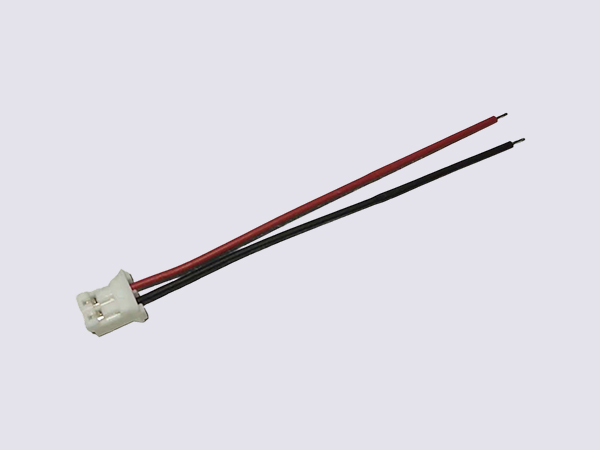
When picking out wiring harnesses, many people easily only focus on the appearance and price, while ignoring the adaptability and durability in actual use. It is not until problems like poor contact, overheating or even safety hazards emerge after installation that they realize their previous choices were not careful enough. In fact, mastering several practical tips can help you avoid most common selection mistakes and pick products that fit your use case and deliver long-lasting performance.
First, clarify your actual usage scenario first, as wiring harness requirements vary drastically across different operating environments. If the harness will be used for a long time in a high-temperature environment, you should prioritize types with more stable temperature resistance for the insulation layer, to prevent the material from hardening and cracking after prolonged heat exposure. If the application involves frequent minor tugs, pulls and bends, you need to pay attention to the flexibility of the wire itself: avoid models that are overly rigid and leave permanent creases after being bent, otherwise the internal wire core will easily break after repeated bending cycles. For scenarios that involve occasional exposure to small amounts of oil, grease or moisture, you should check the corrosion resistance and water-proof performance of the outer insulating material. There is no need to blindly chase an excessively high ingress protection rating — a specification that matches your daily operating environment is fully sufficient, so you do not have to pay extra for performance features you will never use.
Next, check the material and construction details of the wiring harness itself. You can make a preliminary evaluation through simple visual observation and tactile inspection, no professional testing equipment is required. First inspect the wire core: high-quality wire cores have a uniform metallic luster, with no dull, darkened or oxidized black spots. For wires with the same gauge, the more flexible variant usually delivers more stable conductive performance, and is far less likely to develop abnormal overheating when carrying continuous high current. Then check the outer insulation layer: its surface should be smooth and even, with no bulges, air bubbles or obvious color inconsistencies. Gently scrape the layer with your fingernail: a qualified insulation layer will not scratch or peel off easily. When you hold the full harness in your hand to feel its overall texture, the fit between the core and insulation should be moderate — the wire core should never shift or rattle loosely inside the outer layer. A lot of people overlook the connection terminals at both ends of the harness, but these are exactly the sections most prone to failure. You need to verify that the wrapping around the connection points is tight with no loose gaps, and that the harness slides smoothly during plugging and mating operations. It should never be so loose that it slips out unintentionally, nor so tight that installation becomes unnecessarily difficult.
You also need to complete parameter verification before purchase, and never place an order based only on approximate dimensions and general specifications. First confirm the required length of the wiring harness, and reserve a small amount of extra slack, to avoid putting the harness under constant tight tension after installation. Continuous long-term stress will drastically accelerate wear at the connection terminals. At the same time, confirm that the current and voltage carrying capacity of the wiring harness matches your actual working conditions. Never operate the harness continuously at levels very close to its rated upper limit, as this will drastically shorten its service life. If you have signal transmission requirements, you should also check the signal shielding design of the wiring harness, to reduce signal instability issues caused by external interference during operation.
Finally, never blindly chase the lowest possible price. Products with exceptionally low prices almost always cut costs by reducing the purity of the wire core and thinning the insulation layer. They may seem to work fine in the short term, but they are very likely to develop all kinds of malfunctions after extended use. On the other hand, you do not need to blindly opt for premium high-end models that far exceed your actual usage requirements. By making a comprehensive evaluation based on your usage scenario, material details and parameter specifications, you will be able to select a cost-effective wiring harness product that is reliable and worry-free to use.
 Links
Links