
Fuyueda
Focus on connecting wire manufacturer


+86-13631789391
Focus on connecting wire manufacturer
+86-13631789391
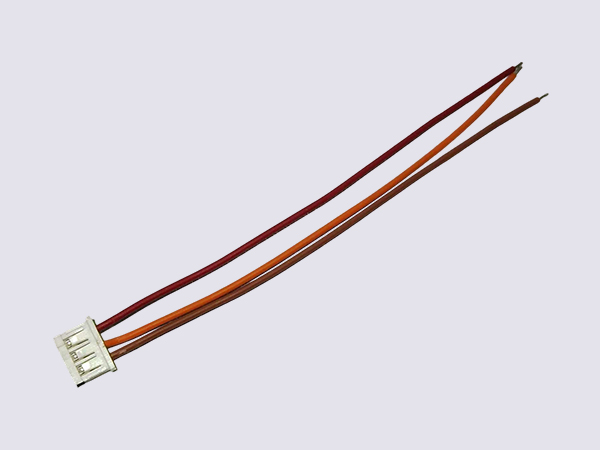
Determining whether a wiring harness meets quality qualification standards can never be concluded based on a single-dimensional visual impression. Its quality performance is embedded in numerous details ranging from internal materials to external manufacturing processes. These details collectively define its long-term operational stability and safety. Many minor malfunctions in daily use can all trace their root causes to hidden risks left behind by overlooked quality details at the time of selection.
A qualified wiring harness first meets baseline quality requirements in its core base materials. As the core component for power and signal transmission, the conductor core must foremost satisfy the uniformity requirement: the entire conductor core should maintain consistent material properties with no localized compositional irregularities. This ensures uniform performance across all sections of the harness when current passes through, preventing abnormal heat buildup in local areas. The outer insulating jacketing layer is also a critical component that cannot be compromised. Its material properties must be properly matched to the characteristics of the conductor core. Within the standard operating temperature range, it must not undergo noticeable hardening and brittling, nor exhibit excessive thermal softening when exposed to heat. Even after multiple cycles of temperature fluctuation within the normal operational range, it will not suffer obvious degradation of insulation performance, and will consistently deliver reliable isolation protection to eliminate risks such as electric leakage and short circuits.
Beyond the base materials, the precision of manufacturing workmanship is also an indispensable qualification standard for compliant wiring harnesses. The stranding of the conductor cores must be uniform and neat, with no localized looseness or misalignment between individual strands. This ensures that during repeated bending operations, every tiny conductor strand shares the mechanical load evenly, preventing scenarios where a small subset of strands bears the full tensile stress and suffers premature fracture. The extrusion molding process of the insulation layer must deliver consistent wall thickness, with no localized thin sections. Even under long-term sustained compression and minor abrasive contact, the insulation layer will not easily tear to expose the inner conductor. The termination processing at both ends of the wiring harness is an especially critical step: the bond between the conductor core and the connection terminal must be tight and reliable, with no gaps caused by incomplete crimping. Even after numerous standard plugging cycles and exposure to operational vibration, the contact resistance remains stable, preventing intermittent connectivity and eliminating abnormal temperature rise at the contact interface.
A qualified wiring harness must also deliver environmental tolerance that aligns with its design specifications. Under regular usage scenarios, it can withstand minor repeated bending and pulling encountered in daily operation, with no internal damage developing after limited usage cycles. When subjected to normal temperature fluctuations, none of its core performance metrics will drop drastically. In common low-moisture and light oil-contaminated environments, it maintains consistent operational status, and will not suffer premature corrosion or material aging. Additionally, the overall dimensional tolerances must be controlled within reasonable ranges: no excessive deviation between the actual length and the rated marked length, nor mismatched terminal dimensions that cause installation difficulties. The harness can be smoothly mated upon installation with no fit issues.
Last but not least, a qualified wiring harness must maintain consistent performance throughout its long service life. It cannot meet all performance benchmarks right after factory production, then experience rapid overall performance degradation after only a very short period of use. Within its rated design service life cycle, both its conductive performance and insulation performance remain within stable specified ranges. It eliminates the need for frequent replacement and maintenance, and delivers sufficient safety assurance for all daily operation scenarios.
 Links
Links